
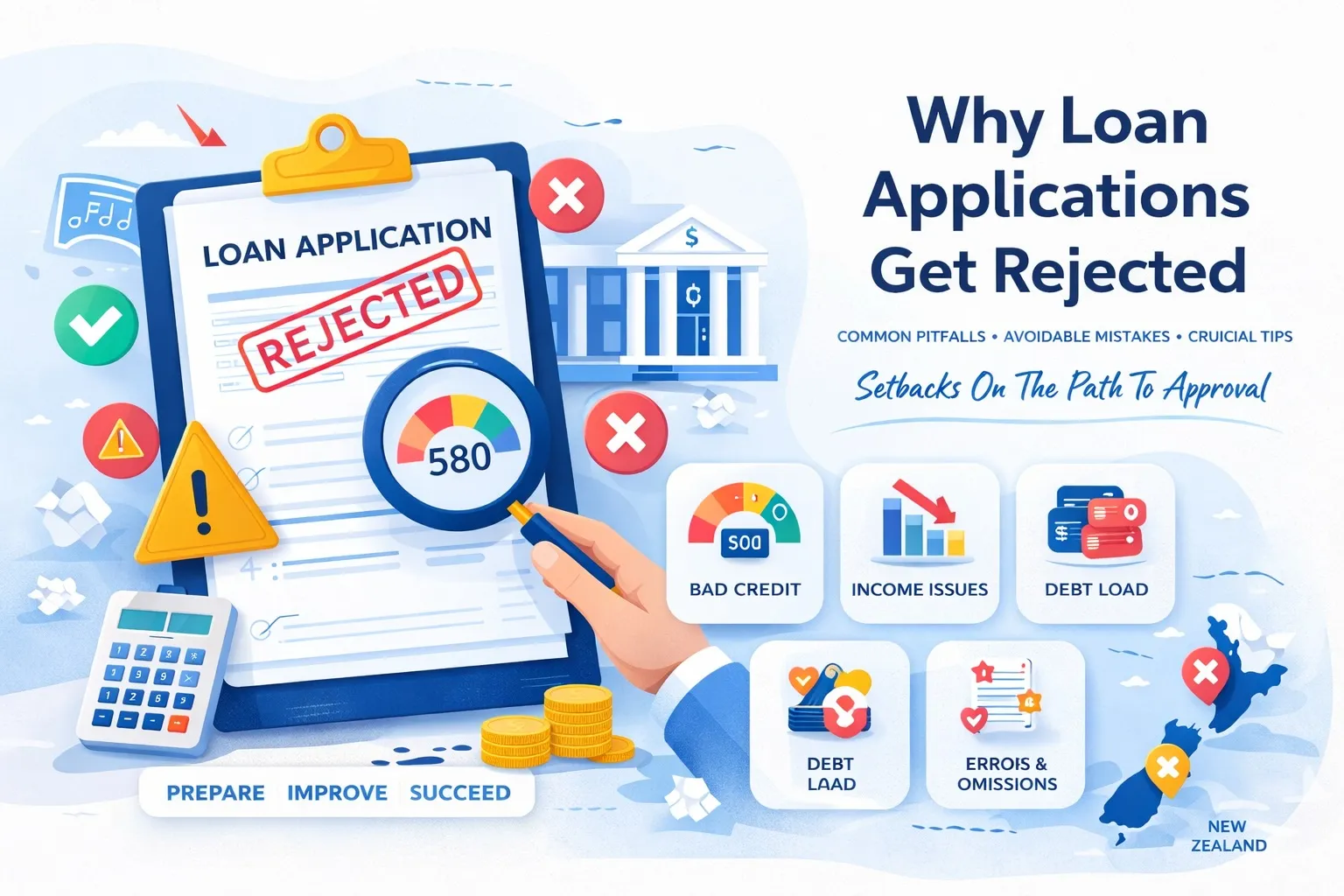
Top 5 Reasons Franchise Business Loans Get Rejected
Even successful franchisees can face hurdles when applying for finance. Here are the five most common reasons franchise loan applications are declined — and how to avoid them.
You’re building on a proven model, with brand recognition and established systems. You’re looking at premises, thinking about how your team might come together — and you can already feel what opening day will be like.
But even successful franchisees can face unexpected hurdles when applying for finance. Whether you’re looking to acquire your first franchise, expand to a second location, or upgrade some equipment, understanding why loans are commonly declined is essential.
Let’s make sure your next loan application doesn’t end with a burst bubble.
1. No clear strategy for loan use
Lenders want to see that any debt you take on is part of a well-considered plan — not a band-aid fix. Vague explanations like “contribute to setup costs” or “additional working capital” don’t give lenders much comfort and can increase the risk of a decline.
How to avoid it:
- Be specific: “We’re applying for $120,000. 75% of the funds will be used for new kitchen equipment, and the balance to refurbish our main seating area as part of a brand refresh. The new equipment will allow us to offer additional menu items and increase revenue by 15%.”
- Use figures: if you’re a startup, show a clear financial forecast. If the loan is refinancing an existing debt or replacing a recurring cost, highlight that.
- Tie the loan purpose to your overall business strategy.
2. Poor or limited credit history
Lenders will typically assess both your personal and business credit history. If you’re just getting started, your personal credit history is really all they have to go on. Even with strong franchisor backing, a poor credit record is a big red flag.
Common flags:
- Payment defaults — particularly for life or business essentials, or where those defaults aren’t quickly rectified
- High levels of debt or enquiry — particularly from lenders that indicate financial stress (such as payday lenders)
How to avoid it:
- Ensure critical payments are always made on time. Lenders want to see you pay your bills on time, every time.
- Review your credit reports early — both personal and any existing business entities.
- Settle old debts and avoid unnecessary credit applications in the lead-up to applying.
Tip: Check your credit reports well before you apply — both personal and business. Surprises on your credit file are much easier to deal with when you have time to fix them, rather than discovering an issue mid-application.
3. Incomplete or unclear documentation
Franchise businesses often require more complex documentation. Lenders want to understand not just your financials, but also the franchise agreement, business plan, and how you’ll manage your obligations.
Frequent issues:
- Applying in the wrong legal entity or being unclear about your business structure
- Missing business plans — or ones that haven’t been tailored to the specific franchise or market
- Financial forecasts that are missing critical components or are wildly unrealistic
- Incomplete disclosure documents
How to avoid it:
- Gather all necessary documents early: business plan, financial forecasts, franchise agreement, franchisor disclosure statements.
- Make sure your business name is correct (and consistent) across all important documents, from the premises lease to the franchise agreement.
- Be ready to explain your business operations, competitive advantage, and local market context.
4. Weak or inconsistent cash flow
Cash flow is the lifeblood of any business — and lenders scrutinise it closely. Even if your business is turning a profit, uneven cash flow due to seasonality, rising costs, or underperformance can make a loan seem risky.
Example: A café franchise in a holiday-heavy coastal town might do 60% of its revenue between November and February — but show lean months outside that window. Your lender wants to know you’ll still be able to make payments in those quieter months.
How to avoid it:
- If your business has seasonal swings, explain how you manage them — whether through staffing, supplier terms, or off-peak promotions.
- Use an accounting system that allows you to show month-by-month turnover, demonstrating that you understand the timing of your revenue.
5. Applying for the wrong type of finance
Franchise owners often underestimate how many finance options exist — and choosing the wrong one might lead to rejection, or worse, repayments that strain the business.
Examples of mismatches:
- Using an unsecured loan for long-term equipment that would be better suited to asset finance
- Seeking a term loan to cover short-term cash flow needs like seasonality, then paying interest on money you don’t need
How to avoid it:
- Talk to a specialist in franchise finance — preferably one who understands your industry segment.
- Compare product types: secured vs unsecured, fixed vs variable, term loan vs overdraft.
- Match the loan term to the asset’s useful life — a fit-out or equipment loan should typically align with the expected years of use.
Key takeaway: Matching the loan term to the asset’s useful life keeps your repayments aligned with the value you’re getting. Short-term debt on a long-term asset strains cash flow, while long-term debt on a short-lived asset means you’re still paying after the benefit is gone.
Bonus tip: leverage your franchisor relationship
Lenders often take confidence from strong franchise systems. If you’re part of a well-known or proven brand, make that front and centre. Some lenders even have pre-approved franchise lists (accredited networks), which can streamline the process.
- Include franchisor training details, support systems, and brand reputation in your application.
- If possible, supply benchmarking data showing average turnover or success rates across the network.
- If your franchisor has referred you to a specific lender, that’s often a strong signal.
Before you apply, ask yourself:
- Can I clearly explain how the funds will be used?
- Is there a black mark on my credit history that I could fix or explain?
- Is my paperwork ready, complete, and accurate?
- Do my financials or forecasts show I can repay the loan?
- Am I applying for the right type of loan?
The bottom line: Most franchise loan rejections come down to preparation, not eligibility. A clear purpose, clean credit, complete documentation, healthy cash flow, and the right loan type — get these five things right and you dramatically improve your chances of approval.
If you’re unsure on any of these, you’re not alone. It’s OK to seek expert advice before applying for finance — and it often makes all the difference. Talk to your franchisor, lean on your accountant, and work with a finance specialist who understands the unique challenges and opportunities of franchising.
Need help with your next step?
Talk to a CFI Finance Specialist — no obligation, just practical advice.